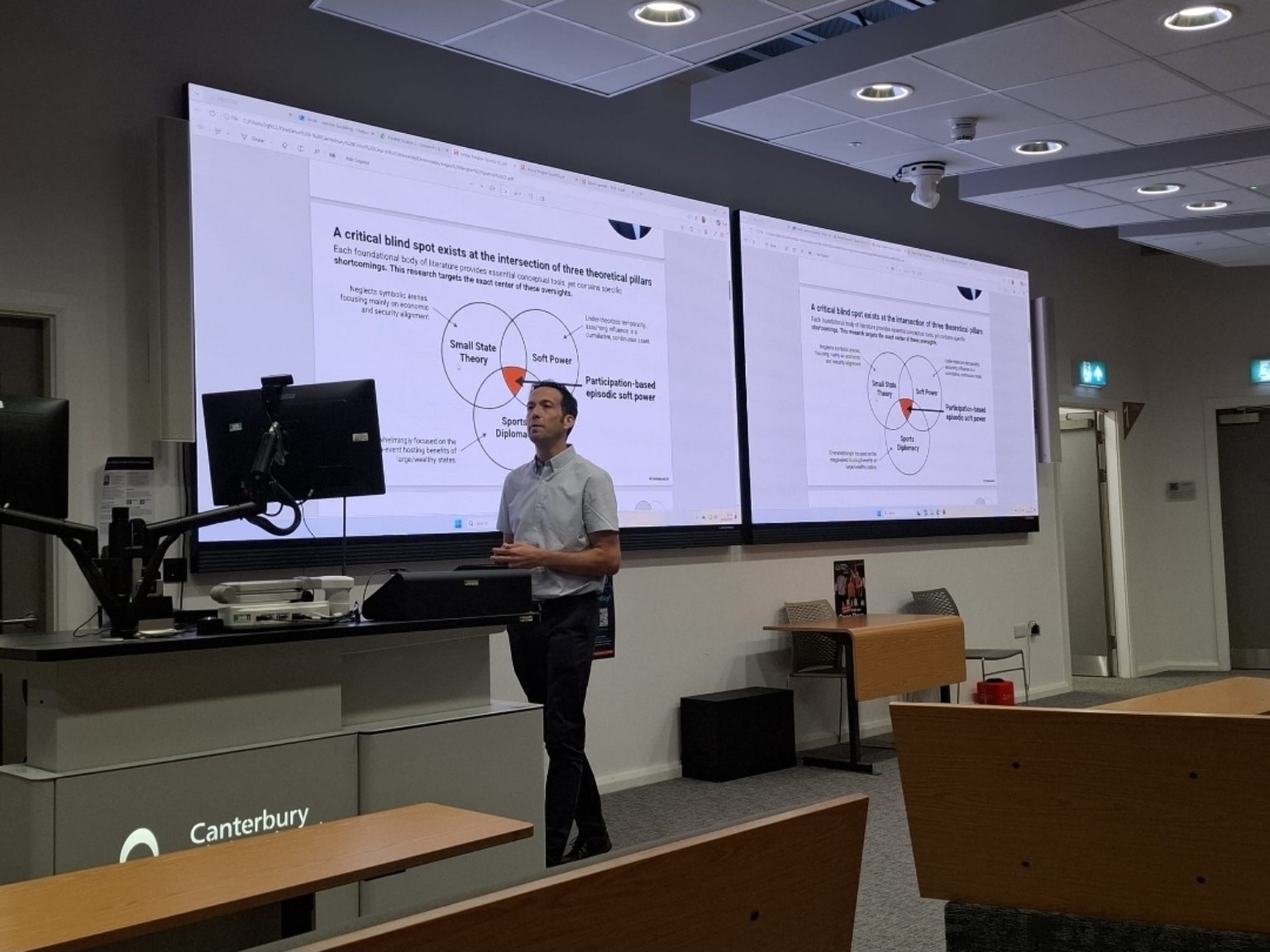
My PhD research examines when rare football success creates opportunities for small states to strengthen their international relationships and reputation.
Christ Church University of Canterbury, UK. June, 2026.
The research question
Qualifying for the FIFA World Cup after a long absence can bring a small state unusual international attention. Under what conditions does this opening lead to attraction, engagement or diplomatic opportunities? Visibility is the starting point; it is not, by itself, evidence of soft power.
The analytical focus
I examine the period around qualification and tournament participation, asking how public institutions, football bodies and other stakeholders respond. The focus is on the decisions, coordination and follow-through that may help turn a brief sporting moment into relationships that endure.
Why it matters
The research aims to inform how governments and sporting organizations approach opportunities beyond hosting major events. It considers what actors can prepare, whom they need to involve and how to assess progress beyond media exposure. This is ongoing doctoral work, with conclusions to be developed through the research.
Policy advisory & capacity building
I offer research-informed policy advice and capacity-building support to ministries of foreign affairs and sport, states, sub-state actors and NGOs. This involves sharing knowledge and insights on the architecture of diplomatic networks: the relationships, institutional coordination and capabilities that connect sporting visibility with international engagement.
The aim is to prepare these networks before sport creates a moment of exposure. Clear objectives, responsibilities and channels of action help institutions respond when an opportunity opens, supporting credible image projection, international reputation and relationships that extend beyond the sporting moment.